
Your Wedding-Day Injectable Timeline
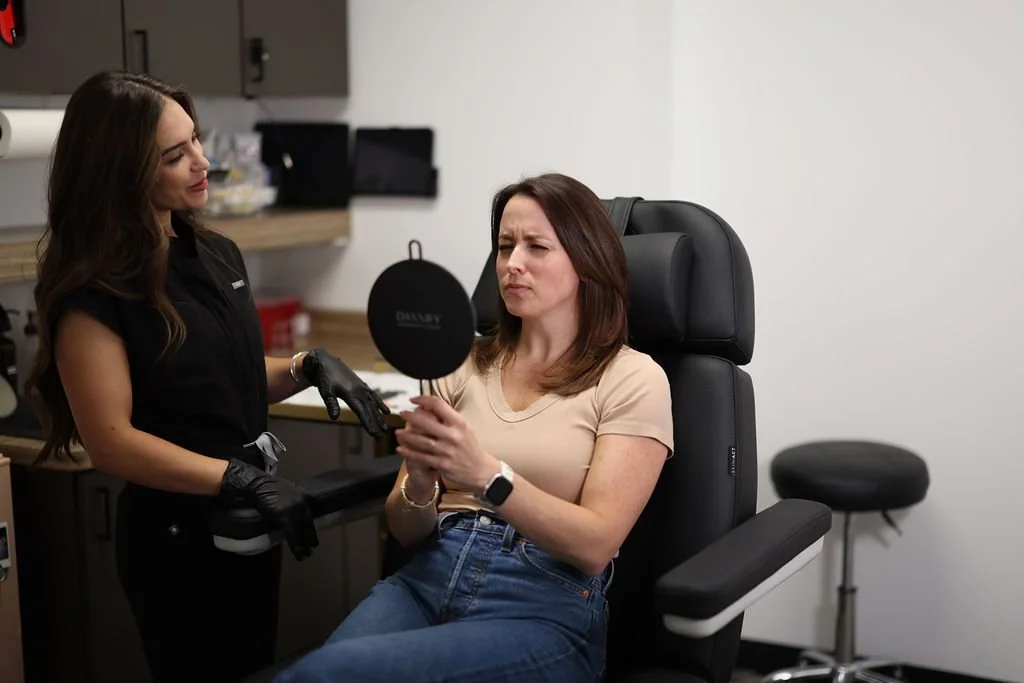
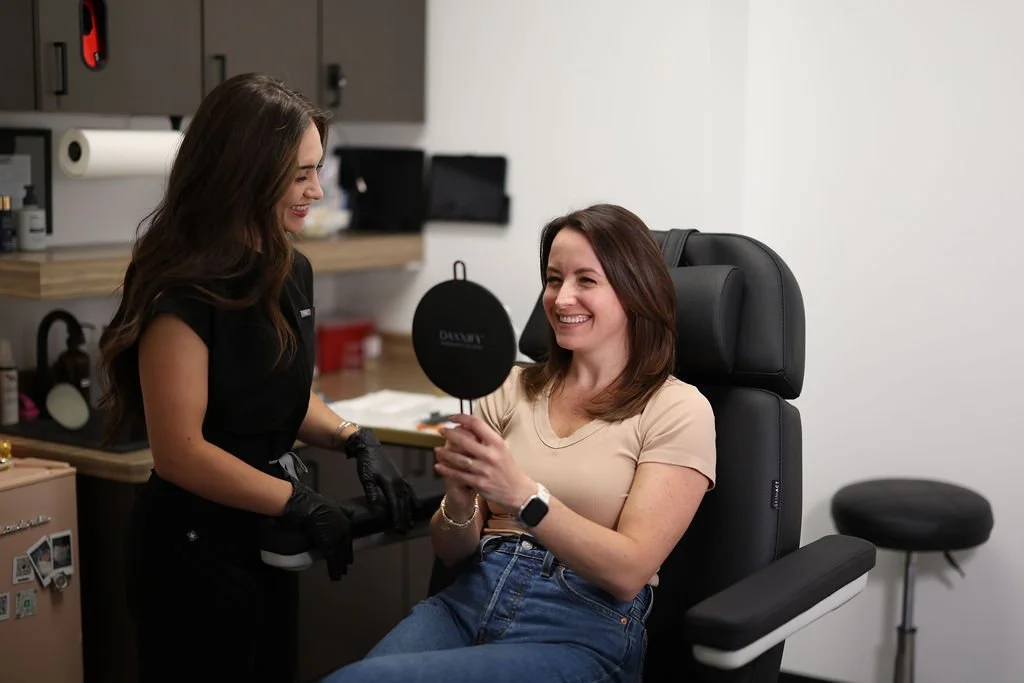
What to Know About Tox, Fillers, RADIESSE+ & More
Your wedding day is one of those occasions when you want to look like the best version of yourself—not like you had “work done.” The key to achieving that natural, refreshed look is choosing the right treatment, in the right amount, at the right time.
Whether you are considering a neuromodulator such as DAXXIFY, a hyaluronic acid filler from the RHA Collection, or a collagen-stimulating treatment such as RADIESSE+, planning ahead is one of the most important parts of your aesthetic strategy.
Here’s what to know before you start your wedding countdown.
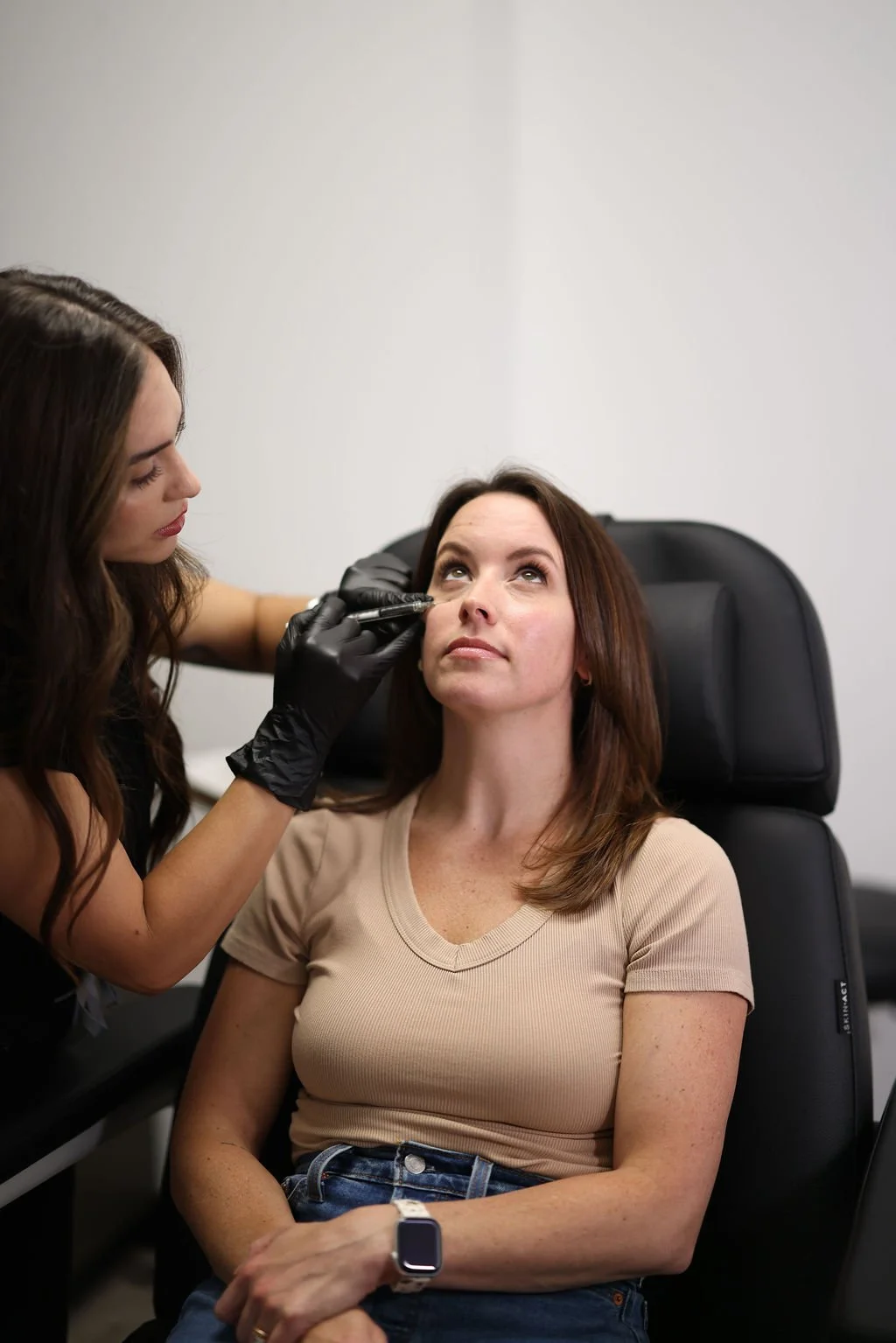
First: Tox and Filler Are Not the Same Thing
One of the most common misconceptions about injectables is that “Botox” and filler are interchangeable. They work in completely different ways.
Neuromodulators: Relaxes the Muscle
Neuromodulators—often referred to as “tox”—include treatments such as Botox and Dysport; at Emily Anne Esthetics, we use DAXXIFY.
Rather than adding volume, neuromodulators temporarily reduce the movement of targeted muscles. This softens dynamic wrinkles—the lines created with facial expressions.
Think:
Forehead lines
Frown lines between the eyebrows
Crow's feet
DAXXIFY is a peptide-formulated neuromodulator that is FDA-approved for glabellar lines. Clinical data show that results can begin appearing as early as the next day but peak 2 weeks after the service. Daxxify lasts an average of 3-4 months, but some patients report upward of 5-6 months.
The goal isn't to eliminate expression. With neuromodulator injections, you can choose to have some movement or limited movement; however, your dose determines the longevity of your treatment.
Dermal Fillers: Restoring Volume
Fillers work differently. Rather than relaxing muscles, they are injected into specific areas to restore or add volume and improve contours.
The RHA Collection, for example, is a family of hyaluronic acid fillers designed for different areas and types of facial correction. Hyaluronic acid is a substance naturally found in the skin, and filler can be used strategically to address concerns such as facial volume loss, folds, lip fullness, and contour.
The distinction is simple:
Tox changes muscle movement.
Filler changes volume and contour.
Sometimes the most beautiful result comes from using one. Sometimes it comes from carefully combining both.
Where Does RADIESSE+ Fit In?
RADIESSE+ is often grouped into the “filler” category, but it deserves its own conversation.
RADIESSE+ is made with calcium hydroxylapatite (CaHA) and is classified as an injectable biostimulator. It can provide some immediate correction while also stimulating the skin to produce collagen and elastin over time. That makes RADIESSE+ fundamentally different from a traditional hyaluronic acid filler.
Think of It This Way:
Hyaluronic acid filler:
“Let's replace or strategically add volume here.”
RADIESSE+:
“Let's improve the skin's underlying structure and stimulate regeneration while also providing correction.”
RADIESSE+ has FDA-approved indications for correcting moderate-to-severe facial wrinkles and folds and for restoring volume loss in the backs of the hands. Certain diluted applications also have an FDA-approved indication for décolleté wrinkles. Over time, RADIESSE can stimulate collagen and elastin, contributing to improvements in firmness, elasticity, and overall skin quality. Results have been shown to last up to two years, although individual results vary.
This makes it particularly interesting for patients who aren't simply looking for more volume—they want their skin to look firmer, healthier, and more supported.
So Which Injectable Is Right for You?
There isn't one “best” injectable. Different products solve different problems.
If your concern is movement-related wrinkles:
A neuromodulator such as DAXXIFY may be appropriate.
If your concern is lost volume or contour:
A hyaluronic acid filler from the RHA Collection may be considered.
If your concern is skin quality, laxity, or structural support:
A biostimulator such as RADIESSE+ may be part of the conversation.
If you have several concerns:
A combination approach may provide the most natural result.
Your Wedding Injectable Timeline
One of the biggest mistakes I see is waiting until the last minute.
Injectables are medical treatments, and your face needs time to respond. Swelling, bruising, asymmetry, and the natural settling process all need to be taken into consideration.
6–12 Months Before the Wedding: Start Planning
This is an ideal time for a consultation if you're considering multiple treatments.
Rather than immediately injecting, your provider can evaluate:
Your facial structure
Skin quality
Volume loss
Dynamic wrinkles
Areas of laxity
Your previous injectable history
Whether you are actively losing weight
Your desired aesthetic for wedding photos
3–6 Months Before: Consider Treatments That Need Time
This can be an excellent window for treatments designed to improve skin quality over time.
If RADIESSE+ is part of your treatment plan, starting several months before the wedding gives your skin time to respond to the biostimulatory effects. The improvement is not simply about what you see immediately after the injection; collagen and elastin remodeling occurs over time, think 6+ months. This is also a good period for evaluating whether additional treatment is actually necessary.
2–3 Months Before: Refine
This is often the time for subtle refinements rather than major changes.
If filler is being considered, your provider can evaluate facial balance and determine whether a conservative amount is appropriate.
The goal should be to have your final result looking settled and natural well before the wedding day.
4–6 Weeks Before: Tox Touch-Up Window
Neuromodulators need time to take effect and settle.
For a wedding, the point isn't to wait until the week before and hope for the best. A several-week buffer gives your provider an opportunity to evaluate the result and determine whether any refinement is appropriate.
2–4 Weeks Before: Leave Your Face Alone
This is the time to resist the temptation to experiment.
Avoid scheduling your first-ever injectable treatment right before your wedding. You don't want your first experience with a new product, technique, or provider to happen days before you're walking down the aisle.
The closer you get to the wedding, the more conservative the approach should become.
The Week of the Wedding: Maintain, Don't Transform
Your wedding week is not the time for major injectable decisions.
At this point, the objective is simple: enjoy your wedding and let your preparation do the work.
The Goal Is Not More. It's Better.
The best injectable treatment often isn't the one that creates the most dramatic change.
It's the one where someone looks at your wedding photos years later and thinks:
“She looks amazing.”
Not:
“I wonder what she had injected?”
Ready to Create Your Wedding-Day Treatment Plan?
Your best injectable results start with a plan. Whether you’re looking to soften expression lines, restore lost volume, improve skin quality, or simply look refreshed for your wedding day, the right treatment depends on your individual features, goals, and timeline.
At Emily Anne Esthetics, we take a thoughtful, personalized approach to injectables so your results feel natural, balanced, and uniquely you.
Ready to start planning? Explore our injectable treatments and schedule a consultation to determine what’s right for you.